What is CPM?
CPM represents one of the many methods used to price web ads and is one of the most common. By definition, CPM stands for Cost Per Mille (or cost per thousand) which is a marketing term to show the price of 1,000 displays of an ad on a page. The first two letters and their meaning are quite obvious but the M for Mille comes from Latin and means "thousands". In terms of web advertising, this method of pricing ads is popular and easy to understand. If a publisher charges $4.00 CPM, the advertiser will pay $4.00 each time 1,000 people view the ad.
How does it work?
Often, Advertisers will determine the success of a CPM campaign by measuring the click-through rate (CTR). Simply put, this is the percentage of people who saw the ad and clicked it. For instance, an ad that is clicked 4 times for every 100 times that it is viewed has a 4% CTR. The CTR, however, does not give the complete picture as an ad can still have an impact even if not clicked.
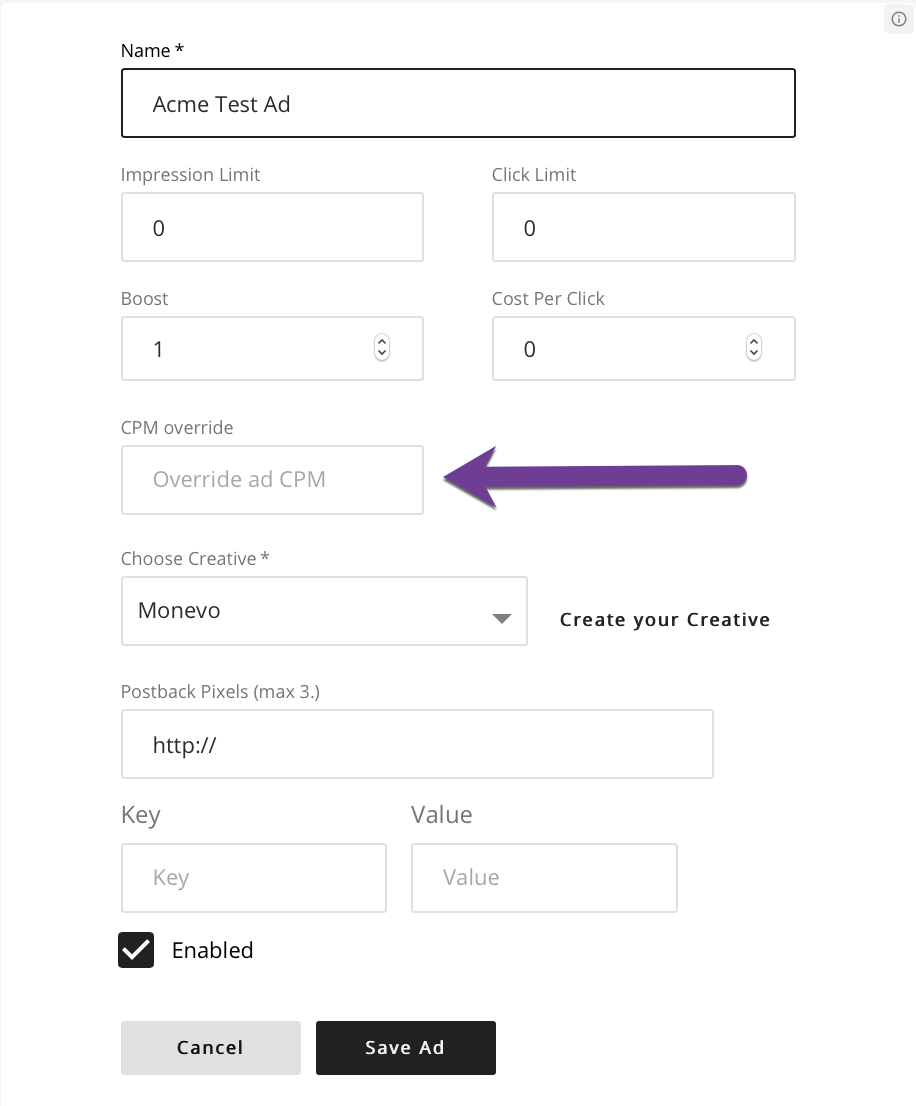
CPM Override
So, what does CPM override do? What does it mean? Quite simply this field on the Advertisement entity allows you to set the CPM value for the Ad. This comes into play when the system looks at performance and optimizes ad selection. You can use this metric to give weighting to certain ads within the Lincx ranking algorithm. Using this method will not affect your reporting or license fee... it is simply a means to affect ad ranking by.